7 February 2022

Monday

Approaching Stanage Edge from the south

I made a simple vegetarian lunch today. Tomato soup with softened chopped onions and garlic - mopped up with fresh seeded wholemeal bread from Tesco. Despite the weather forecast, there was a big blue sky and golden sunshine outside. 

I didn't need any more persuasion. Time for another walk. Not too far away. Back to the moors and a stroll on Stanage Edge. I needed to blow the cobwebs away and add a couple more miles to my dial. But just then the telephone rang.

It was my brother Robin phoning from the L'Ariege region of southern France. Now that fellow can talk for England even though he lives in France. We always enjoy a good chinwag together, swapping news and putting the world to rights.

And when the conversation drew to a natural close, I noticed that an hour had passed by. The outside world was no longer as inviting as it had been but I still jumped into Clint's cockpit and shouted "Chocks away!"

I have been to see the millstones under the southern end of Stanage Edge many times. They were probably abandoned at the time of the first world war when thousands of men from just about every trade and every corner of the kingdom went off to fight.

I can still just about recall the first time I saw them back in 1979. I just came upon them with no prior knowledge that they would be there. It was quite a surprise. There are several other abandoned millstone workings in The Peak District complete with carved stones that never made it to their destinations for by 1918 the world had changed forever.

Back home I prepared an evening meal using the dahl curry that Shirley had made when I was at the football match on Saturday. She had carefully followed instructions set out in one of our son's "Bosh!" vegan recipe books and I must say that the end result was super tasty. 

Lata

"The Nightingale of India"

The population of India is currently 1.38 billion and rising. In the west, we are all very aware of this great and populous country with its rich and chequered history, its mysticism, its beauty, its joys and its sorrows. Yesterday, almost the entire Indian population shed collective tears over the death of  Lata Mangeshkar at 92 from COVID19.

She was a very famous "playback singer". This term describes recording artistes whose singing is pre-recorded for use in films. Playback singers record songs for soundtracks, and actors or actresses lip-sync the songs on camera; the actual singer does not appear on the screen. Lata Mangeshkar's voice was familiar to generations of Indians for she sang countless songs for the ever expanding Bollywood film industry in at least thirty six Indian languages.

She received many awards in her long career. In 2001, in recognition of her contributions to the nation, she was awarded the Bharat Ratna, India's highest civilian honour.

Visitors to this blog are nearly all westerners and I guess that most of us feel disconnected from the soundtracks of Bollywood. We don't understand the lyrics and the singing styles are strange to our ears. Nonetheless, I think it is good to pause for a little while and give Lata Mangeshkar a listen as she departs this life for the "seventh heaven" of Hinduism.

Here she is in 1963 on India's Republic Day singing "Aye mere watan ke logo" in New Delhi in the presence of Prime Minister Jawaharlal Nehru who was reportedly moved to tears. The Sinai-Indian War of 1962 appeared to have ended just a few months before. The first verse with English translation is printed below the video:-
ai mere vatan ke logo, zaraa aa.nkh me.n bhar lo paani
Oh, my fellow citizens! Shed a few tears.
jo shahiid hue hai.n unkii, zaraa yaad karo qurbaanii
Remember the sacrifice of those martyrs.
tum bhuul na jaao unko, is liye suno yah kahaanii
Listen to this story so that you do not forget them.
jo shahiid hue hai.n unkii, zaraa yaad karo qurbaani
Remember the sacrifice of those martyrs.

5 February 2022

Diversion

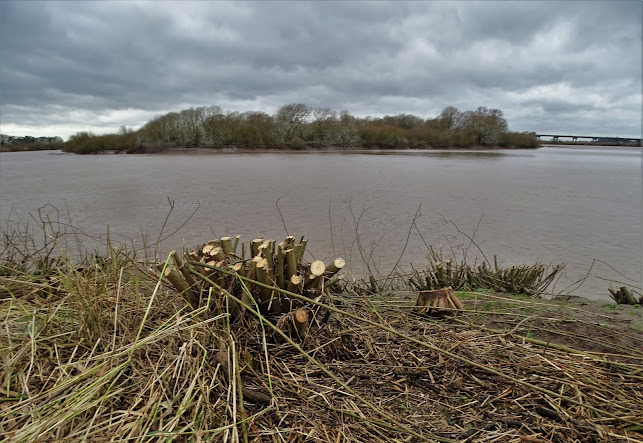
Hook Island in The River Ouse - also known as Howden Dyke Island

Today, my faithful South Korean automobile kindly transported me to Hull and back. I went to see my football team lose at home to Preston North End though of course I did not know that this would happen when we left home in the morning.

I had set out early enough to factor in some walking and photo snapping around two villages that are close to Goole - Airmyn and Hook. These low-lying settlements sit close to The River Aire and The River Ouse respectively and were familiar to Young Tasker Dunham - the author of "A Yorkshire Memoir" - when he was but a boy.

St David's Church in Airmyn 
The village hall in Hook

After this two hour diversion, I roused Clint and we carried on with our journey to Hull along The M62 motorway. He parked himself at the park and ride facility in Hessle on the west side of the city and then I caught the stadium bus.

Near to the football ground, there is a nice little cafe run by a young Polish couple. For the umpteenth time I met up with my friend Tony there and another Tigers fan called Carl.. I had what they call "a British breakfast" and afterwards a buttered toasted teacake with a mug of tea.

All three of us were hopeful when we marched through West Park to what is now called the MKM Stadium. After all, our beloved team had won their previous three matches against tougher opposition than The Lilywhites - Preston North End.. However, on the day,Preston were the better team and we could not resent their victory by just one goal to nil.

It takes just over an hour to drive back to Sheffield where my devoted wife had prepared an evening meal of grilled Lincolnshire sausages, fried mushrooms, baked beans and dauphinoise potatoes. Just what I needed to assuage my disappointment.  Clint was left outside shivering in the February cold. He is too big to make it through our front door.

Cargo ship at Howden Dyke Wharf on The River Ouse.
It is called "The Wilson Aviles" and was launched in 2008.

4 February 2022

"Belfast"

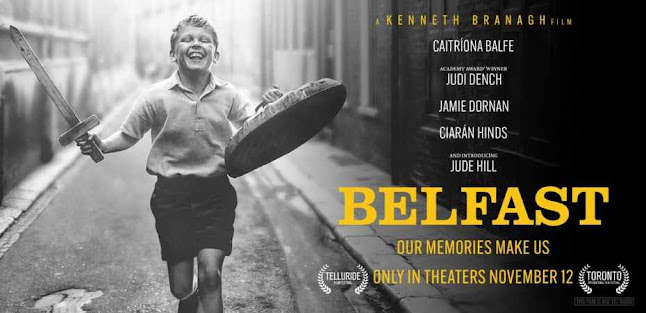
Shirley and I went to see "Belfast" yesterday afternoon. Not the city in Northern Ireland but the semi-autobiographical film about Sir Kenneth Branagh's  childhood in that notorious city. He wrote the script and he directed it. His part was played endearingly and brilliantly by an animated little actor called Jude Hill.
Sir Kenneth Branagh
If you wish to read a professional review of "Belfast", just search the net and I am sure you will easily locate several of them.

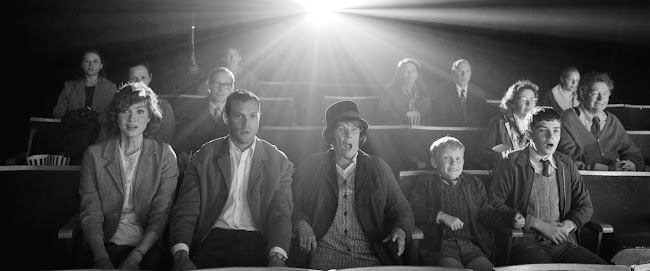
"Belfast" is almost wholly presented in black and white, a factor that helps to place it back in 1969 and 1970. The Troubles are breaking out between Catholic and Protestant neighbourhoods but that appears like mere background as the film focuses upon the happiness, unity and anxieties of one working class Protestant family.

There 's a pretty stellar cast including a lovely cameo performance by the brilliant Yorkshireborn actress Judi Dench as Granny. Jamie Dornan, who starred in the recent BBC TV production of "The Tourist", plays the part of Pa and I especially liked the performance of Ciarán Hinds as Buddy's grandfather. By the way, Buddy is the name given to Kenneth  Branagh's character.

"Belfast" made me laugh in places and it also made a few tears roll down my cheeks. It was not overly sweet nor overly sentimental but of course it did not set out to paint an accurate hard hitting documentary-type portrait of  Belfast as The Troubles burst forth. It was affectionate as if recalled through the mists of childhood memory and we very much enjoyed it. A lovely, shared cinema experience.
Afterwards, after we had alighted from the number 88 bus, we called in at our neighbourhood's brand new pub - "The Dark Horse" which has opened in the premises of what was once Lloyd's Bank. There we bumped into two old friends - Linda and Ian - and gossiped for an hour before heading home for a later evening meal than we had anticipated.

3 February 2022

Earthbound


Every year dozens of new species of animals, insects and plants are recorded on this small planet. I find that kind of mind blowing. There we are sending rockets into space and yet we don't entirely know what we have down here - in our forests, our mountains, our rivers and our oceans.

It is rather tragic to think that as acres of virgin rain forest are destroyed, we frequently lose species that are gone before we have even discovered them.  Collectively, we are meant to be guardians of Earth but evidence suggests that we don't care a fig. We continue to destroy what we have got.

The tiny brookesia nana chameleon shown in the top video was "discovered" just last year though almost certainly it was already known to some inhabitants of northern Madagascar. "Discovered" sometimes means recorded by Science for the first time.

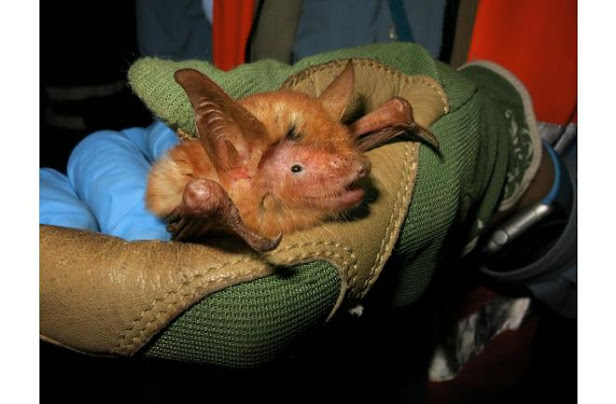
Also "discovered" in 2021 was The Bright Orange Bat (myotis nimbaensis) found only in caves in the Nimba Mountains of West Africa:-

2 February 2022

2222222

Ken Dodd (1927-2018)

I am posting this at  2.22pm on February 2nd, 2022. That's 2.22 on the second day in the second month of the year 2022. You could even sing it like this: "Toot-toot-toot-toot-toot-toot-too!" As Ken Dodd, the late Liverpudlian comedian might have remarked, "How tickled I am!" to have stumbled upon such a thing. Not all days can be as silly as this one so let's enjoy it as long as we can. A bit of silliness is good for the soul..."Toot-toot-toot-toot-toot-toot-too!"

P.S. The name of this font is "Courgette". As far as I know, there is no font called "Zucchini"!

1 February 2022

Warmth

I knew that something was up on Sunday morning when I heard Shirley taking her morning shower in our upstairs bathroom. There we just have an electric shower that is fed with cold water. In the downstairs bathroom, the shower  is fed directly from the new "combi" boiler for which we paid a king's ransom last June.

Yes - you have got it. The new boiler  had developed a fault and was no longer working. We checked the manual and in spite of pressing the "reset" button, the boiler soon ground to a halt once more. The digital display was flashing "F29" which meant that we wouldn't be able to fix it ourselves. 

Fortunately, the boiler is under guarantee so on Monday morning a central heating engineer from the company that did the fitting work arrived to assess the problem. He soon decided that it was an issue that needed to be addressed by the boiler manufacturer. 

Another big van arrived this morning from "Vaillant" and within half an hour the problem was fixed. We had central heating and hot water once again. Whaay! Forty eight hours of living in a fridge was over and we could return to normal life.

Both Shirley and I grew up in houses that did not have central heating systems. Our houses were heated by coal fires and electric storage radiators. In wintertime, I often woke up with a freezing nose, reluctant to throw back the cosy bed covers and put my bare feet on the ice cold linoleum in my bedroom. Sometimes there was ice on the inside of our single-glazed bedroom windows. 

At this latitude on the edge of the Atlantic Ocean, home heating in wintertime is essential and those cold forty eight hours we have just endured reminded me of how much British people rely on central heating these days. Of course we cannot burn domestic coal any more and in cities wood-burning stoves are greatly discouraged. People are kind of trapped. We have to pay the energy providers.

As I thought about writing this blogpost, I investigated how Arctic peoples kept themselves warm in desperately cold winters. Clothing and footwear were of key importance. Of course they used animal skins including the hides of caribou, seals and polar bears. Their shelters were well-insulated - including igloos built of packed snow. Inside a well-constructed and inhabited igloo, the temperature might rise to be 100 degrees Fahrenheit warmer than in  the outside air. Coastal Inuit people made oil for cooking and light from seal and whale blubber. They were very resourceful people but their winters must have been very hard  indeed. It is likely that genetically they were better predisposed to coping with very cold weather.

Most Visits